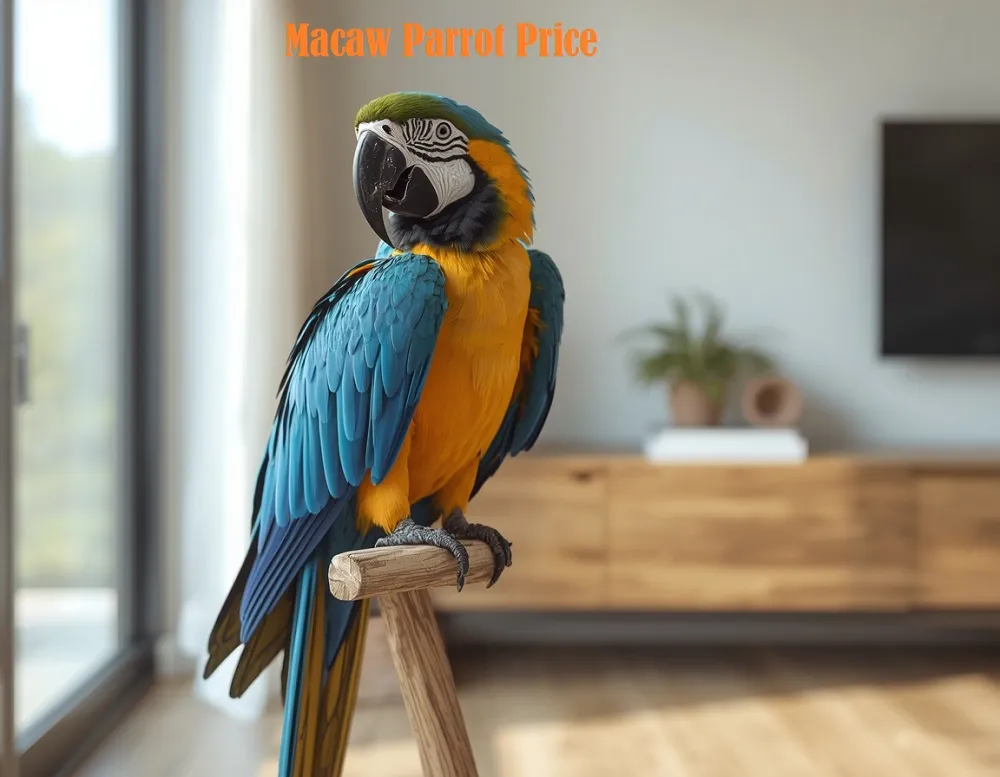
Macaw Parrot Price 2026: Full Buying Guide
Macaw Parrot Price and Buying Guide 2026: Ownership Reality
Falling for a macaw’s colours is easy. Working out whether you can actually give one a good life for the next 30 to 70 years is the harder question, and it is one worth answering honestly before any money changes hands. This guide covers what macaw ownership really involves, current prices across the USA, UK, Canada and Australia, and how to buy safely. If you want species profiles, lifespan detail and care basics first, see our companion article, Macaw Parrot Guide: Species, Origin, Behaviour and Care.
Are Macaws Good Pets?
Macaws can be extraordinary companions: intelligent, affectionate and full of personality once properly settled and socialised. That said, they are not an easy yes for most households.
The pros
Macaws bond deeply, are endlessly entertaining to watch and interact with, and reward consistent, patient handling with genuine companionship that can last decades.
The cons
They are loud, sometimes reaching volumes that neighbours notice, particularly in flats or terraced housing. They need large amounts of space, daily one-on-one interaction, and a diet and vet care that costs meaningfully more than smaller pets. Their lifespan also means planning for a bird that may outlive your current living situation, relationship, or even career.
Whether a macaw is a good pet depends entirely on whether your daily life and home can accommodate what the bird genuinely needs, not on how appealing it looks in a video.
Macaws Are Not Beginner Birds
Most avian vets and experienced keepers agree macaws are not suited to a first-time bird owner.
Time commitment
Macaws need daily interaction, not occasional attention. A macaw left alone for long stretches most days is likely to develop behavioural problems, including screaming, feather plucking or aggression.
Noise level
Wild macaw calls evolved to travel through dense rainforest. That same volume does not disappear indoors, and it is a factor that catches out more new owners than almost any other.
Emotional needs
Macaws are not a pet you can leave in a cage and check on twice a day. They need consistent socialisation, ideally from more than one household member, and they notice and respond to changes in routine, mood and attention far more than most people expect from a bird.
First-time bird owners are generally better served starting with a smaller, less intensive parrot species and building experience before taking on a macaw.
How to Bond with a Macaw Parrot
Trust-building steps
Bonding starts slowly. Sitting near the cage without demanding interaction, offering treats by hand, and letting the bird choose when to approach builds trust far more effectively than forcing contact. Sudden movements, loud reactions to nips, or inconsistent handling all set the process back.
Training routine
Short, frequent training sessions, five to ten minutes at a time, using positive reinforcement, work better than long, infrequent sessions. Consistency matters more than intensity: a macaw that sees the same calm, predictable approach every day settles and bonds faster than one dealing with unpredictable handling.
Patience pays off disproportionately with macaws. A bird that takes weeks or months to trust a new owner can, once bonded, become one of the most attached and communicative pets many owners will ever have.
Macaw Parrot Price in 2026 (USA, UK, Canada, Australia)
Macaw prices vary enormously by species, age, training and country, driven by breeding difficulty, import regulation and local demand.
| Species | USA (USD) | UK (GBP) | Canada (CAD) | Australia (AUD) |
|---|---|---|---|---|
| Mini macaws (Hahn’s, severe) | $800 – $2,000 | £900 – £1,800 | $1,000 – $2,200 | $1,000 – $3,000 |
| Blue and gold macaw | $1,200 – $3,000 | £1,300 – £3,000 | $1,500 – $3,500 | $4,000 – $7,000 |
| Scarlet macaw | $2,000 – $4,000 | £1,500 – £4,000 | $2,200 – $4,000 | $4,500 – $7,500 |
| Green-winged macaw | $2,500 – $4,500 | £2,000 – £4,000 | $2,800 – $4,500 | $5,000 – $8,000 |
| Military macaw | $1,500 – $3,000 | £1,500 – £3,500 | $1,800 – $3,200 | $3,500 – $6,000 |
| Hyacinth macaw | $10,000+ | £8,000+ | $12,000+ | $10,000+ |
| Rescue adoption (most species) | $400 – $1,000 | £300 – £900 | $500 – $1,200 | $600 – $1,500 |
In the USA, Macaw Parrot Price
In the US, common large macaws such as the blue and gold typically range from around $1,200 to $3,000, with scarlet macaws often falling between $2,000 and $4,000. Rarer species command far more: hyacinth macaws frequently sell for $10,000 or higher given their rarity, size and specialist care needs. Rescue adoption is significantly cheaper, generally $400 to $1,000, and is worth serious consideration for buyers focused on giving a bird a good home rather than acquiring a specific colour or age.
Macaw Parrot Price in UK
UK buyers can expect to pay roughly £1,000 to £4,000 for common large macaw species such as the scarlet or green-winged macaw from a reputable breeder, with prices varying by age, temperament, training and documentation. Listings advertising macaws well under this range, particularly anything below £800, should be treated with real caution, since genuine hand-raised, health-checked macaws rarely appear at that price.
Macaw Parrot Price in Canada
Canadian macaw prices sit in a broadly similar band to the US market once converted, with common large macaw species typically ranging from roughly $1,500 to $4,000 CAD through established Canadian aviculturists, and hybrid or specialty birds such as the Catalina macaw priced individually based on lineage and training.
Macaw Parrot Price in Australia
Australia’s strict import and biosecurity rules limit supply, which pushes prices noticeably higher than most other markets. Blue and gold macaws commonly range from AUD 4,000 to 7,000, mini macaws such as the Hahn’s from around AUD 1,000 to 3,000, and hyacinth macaws, when available at all, can exceed AUD 10,000 given their extreme rarity in the Australian market.
How Much Does a Macaw Parrot Cost Annually?
The purchase price is genuinely the smallest part of macaw ownership over its lifetime. A realistic annual budget includes:
- Food: A varied diet of quality pellets, fresh fruit, vegetables and nuts typically runs $100 to $200 a month for a large macaw, or roughly $1,200 to $2,400 a year
- Cage and enrichment: Beyond the initial cage purchase, which itself can run several hundred to a couple of thousand dollars for a suitably large enclosure, ongoing toy and perch replacement due to a macaw’s powerful beak adds another $200 to $400 a year
- Vet care: Routine annual checkups with an avian vet, plus occasional unplanned visits, commonly total $200 to $500 a year for a healthy bird, with emergency treatment costing considerably more if it arises
Lifetime cost breakdown. Multiply a conservative annual estimate of $1,500 to $3,000 by a realistic 40 to 60 year lifespan, and total lifetime costs for a single large macaw can reach well into six figures once purchase price, housing, food, enrichment and veterinary care are all factored in. This is the calculation most buyers skip and the one that matters most.
Baby Macaw Parrot Price vs Adult
Hand-fed, weaned baby macaws consistently command higher prices than adult birds of the same species, often by a wide margin.
Why babies cost more. Hand rearing a macaw chick is labour intensive, requiring frequent feeding, careful temperature control and close monitoring over several months. Breeders price this labour into the sale, alongside the appeal of a bird that bonds from an early age without the baggage an older bird might carry.
The training cost factor. An older, rehomed macaw is often available for less, sometimes considerably less, but frequently needs behavioural rehabilitation, particularly if it was under socialised, previously neglected, or passed through multiple homes. Buyers sometimes end up spending on training or behavioural consultation what they saved on the initial purchase price, so a cheaper adult bird is not automatically the more affordable option once total cost is considered.
Where to Buy Macaw Parrots Safely
Licensed breeders
Reputable breeders provide health guarantees, allow visits to see the bird’s living conditions, and can show documentation covering hatch date, parentage, and any relevant certification. A breeder who refuses visits or pushes for a rushed sale is a clear warning sign.
Exotic bird breeders and specialist dealers
Established exotic bird specialists, particularly those who have operated for years with visible reviews and physical premises, tend to offer more reliable health and temperament outcomes than casual online listings.
Adoption centres and rescues
Parrot rescues regularly have macaws needing new homes, often at a fraction of breeder prices, and adopting directly addresses the reality that many macaws are surrendered by owners who underestimated the commitment. Rescue birds may need patience and behavioural work, but they offer a genuinely good option for experienced or committed new owners.
Across all three routes, ethical sourcing matters. Wild-caught birds, undocumented imports and unusually cheap listings are strongly associated with the illegal wildlife trade, which has driven population declines in several macaw species. Buying only from sources that can demonstrate captive breeding and proper documentation protects both the buyer and the species.
Macaw Parrots for Sale, What to Check Before Buying
Before handing over money for any macaw, verify the following:
- Health certification. A recent avian vet health check, ideally within the last few weeks, confirms the bird is free of obvious illness and gives you a documented baseline for future care
- Breeder reputation. Look for reviews, ask for references from previous buyers, and be wary of sellers unwilling to answer detailed questions about the bird’s history and rearing
- Legal documentation. In most countries, including the UK, macaws require CITES paperwork confirming legal, traceable origin. A seller who cannot produce this documentation should be avoided regardless of how good the price looks
Taking the time to check these three things before buying is the single most effective way to avoid both a financial loss and a welfare problem down the line.
Frequently Asked Questions
How much does a macaw parrot cost in the US?
Common large macaws typically range from $1,200 to $4,000, while rare species such as the hyacinth macaw can exceed $10,000.
Is a macaw a good pet for a first-time bird owner?
Generally not recommended. Their noise, space needs, longevity, and emotional demands make them a challenging first bird, and most experienced keepers suggest starting with a smaller species first.
How can I buy a macaw safely?
Buy only from a licensed breeder, established specialist dealer, or reputable rescue that can provide health certification, breeder history, and proper legal documentation such as CITES paperwork.
Do baby macaws cost more than adult macaws?
Usually yes, because hand rearing is labour intensive. Adult or rescued macaws can be cheaper upfront but sometimes need additional training or behavioural support.
What is the total lifetime cost of owning a macaw?
Factoring in purchase price, housing, food, enrichment and veterinary care across a 40 to 60 year lifespan, total lifetime costs commonly reach well into six figures.
Final Thoughts on Macaw Parrots
Owning a macaw is a genuine, decades-long responsibility, closer in scale to raising a dependent family member than to keeping a typical pet. The bird you bring home today may still need daily care and attention when your current circumstances, home, or even career have changed several times over.
That is not a reason to rule macaws out. For the right household, one with space, patience, tolerance for noise, and a genuine willingness to meet a highly intelligent animal’s needs for decades, a macaw can be one of the most rewarding companions available. The responsibility simply has to be taken seriously from the outset rather than discovered after the bird has already come home.
Research thoroughly, meet the bird in person wherever possible, ask hard questions of any breeder or rescue, and be honest with yourself about whether your life, today and for the next several decades, genuinely has room for what a macaw needs. That honesty, more than any single piece of buying advice, is what determines whether macaw ownership goes well.